
Gran Tarajal, 2018: eight sunken boats, eight months of work
A spill in open sea disperses. Inside a port it does not: it stays. That is why Gran Tarajal is the case closest to what a marina experiences.
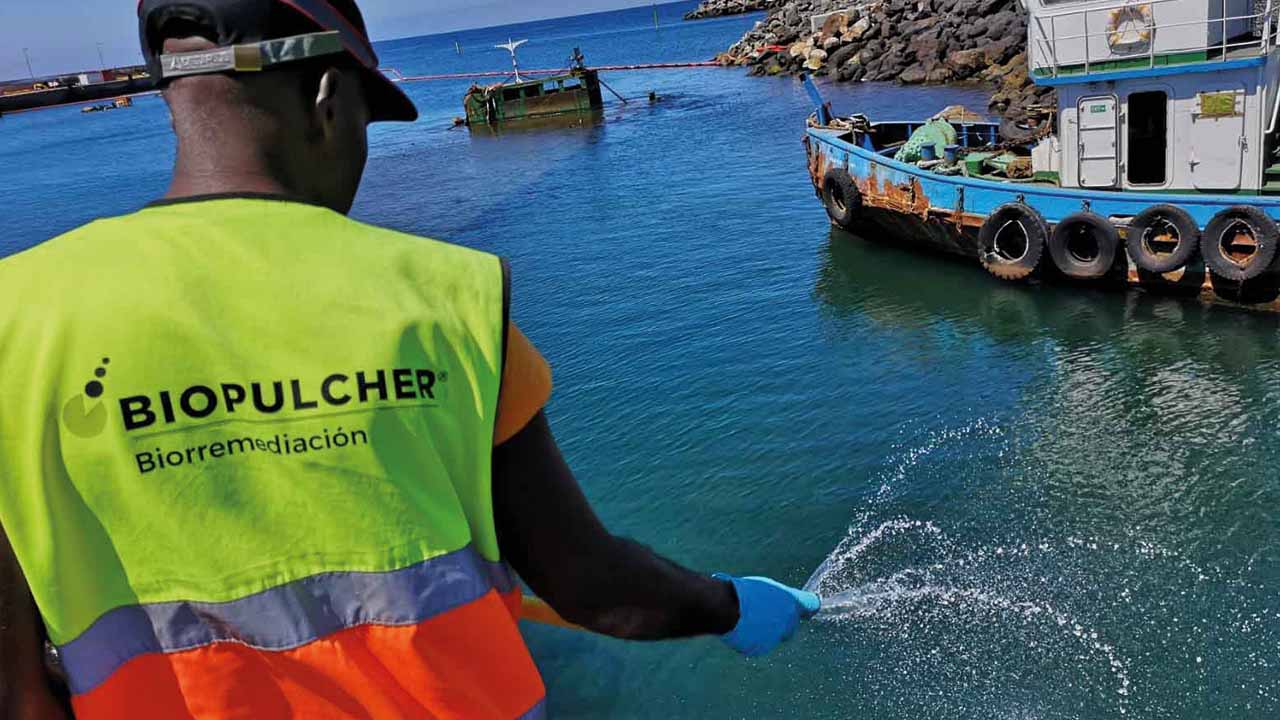
What happened
In 2018, the sinking of eight vessels in the port of Gran Tarajal, Fuerteventura, left the harbour waters contaminated with hydrocarbons. The problem was not only the volume: it was that it sat inside a basin, in permanent contact with docks, boats and seabed.
The intervention
BioPulcher treated the harbour waters with bioremediation for eight months, completing the cleanup without altering the marine ecosystem. It is the largest operation of its kind carried out in Spain.
Why it is the most relevant case for a port
Large open-sea spills are fought with resources a marina neither has nor needs. Gran Tarajal, by contrast, was pollution confined in a basin: boats, docks, corners and seabed. That is exactly a marina's scenario, only multiplied.
And it demonstrated two things that matter day to day: that treatment can be sustained for months without accumulating waste, and that it can coexist with port activity instead of shutting it down.
Want the full technical dossier?
System details, reports from the CSIC and the University of Vigo, and the Spanish Merchant Marine approval.
Download dossier